
Tegucigalpa Map
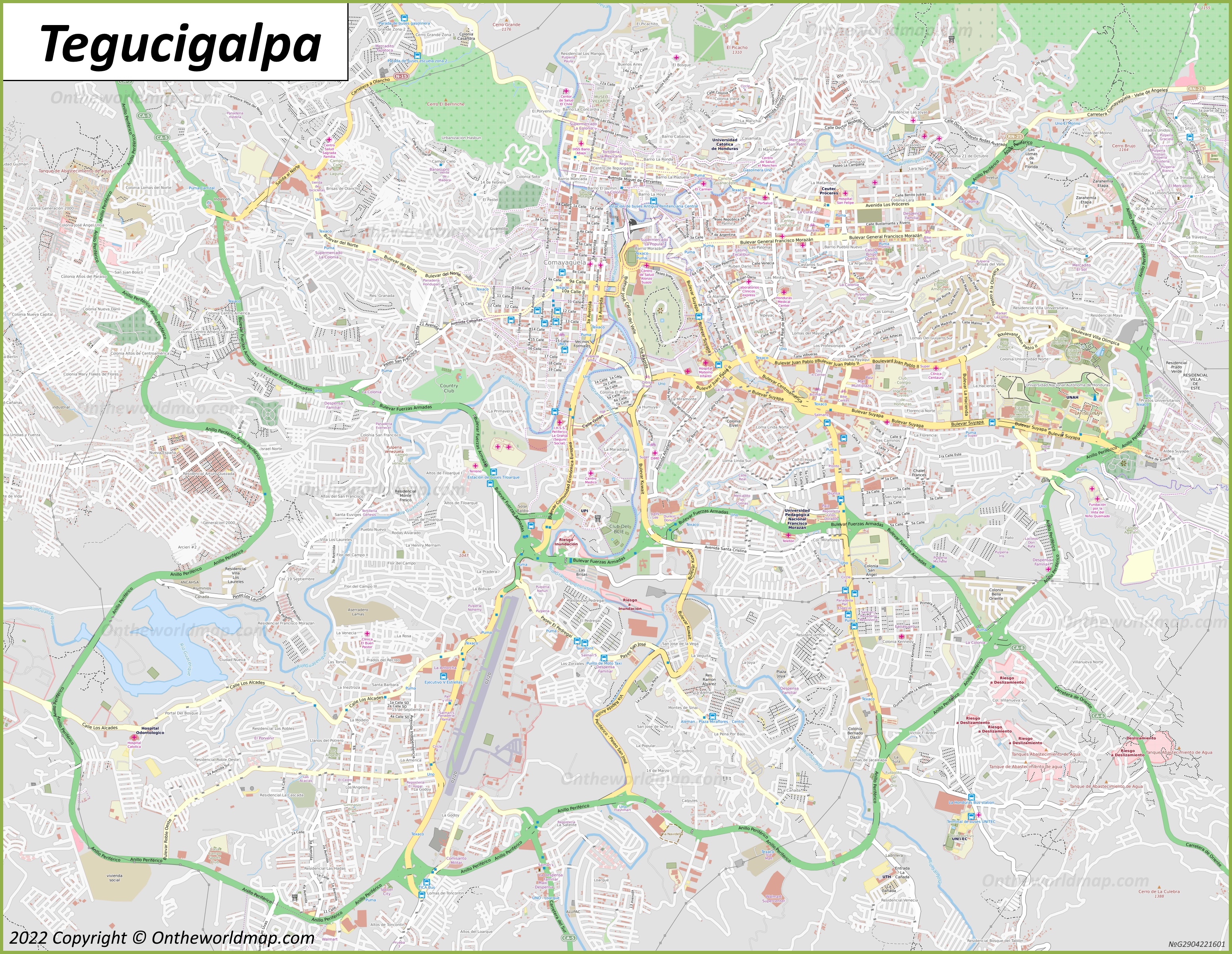
Description:
This map shows neighborhoods, streets, roads, hospitals, lakes, rivers, buildings, airport, viewpoints, and parks in Tegucigalpa.
Size: 3100x2400px / 3.53 Mb
Author: Ontheworldmap.com
Map based on the free editable OSM map openstreetmap.org.
You may download, print or use the above map for educational, personal and non-commercial purposes. Attribution is required. For any website, blog, scientific research or e-book, you must place a hyperlink (to this page) with an attribution next to the image used.
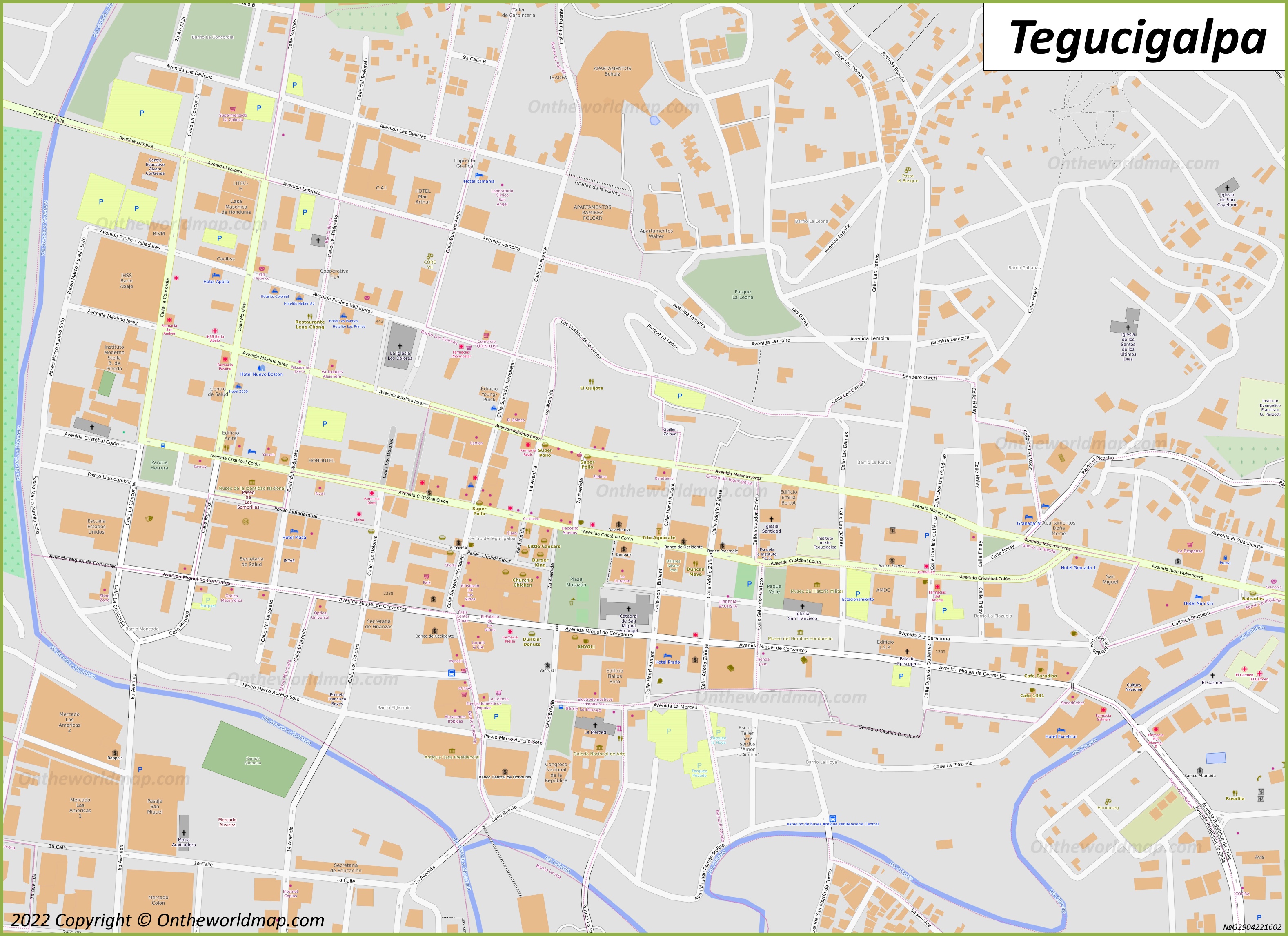
Description:
This map shows streets, houses, buildings, museums, cafes, bars, restaurants, hotels, monuments, parking lots, shops, churches, points of interest, and parks in Tegucigalpa City Centre.
Size: 3155x2293px / 1.74 Mb
Author: Ontheworldmap.com
Map based on the free editable OSM map openstreetmap.org.
You may download, print or use the above map for educational, personal and non-commercial purposes. Attribution is required. For any website, blog, scientific research or e-book, you must place a hyperlink (to this page) with an attribution next to the image used.
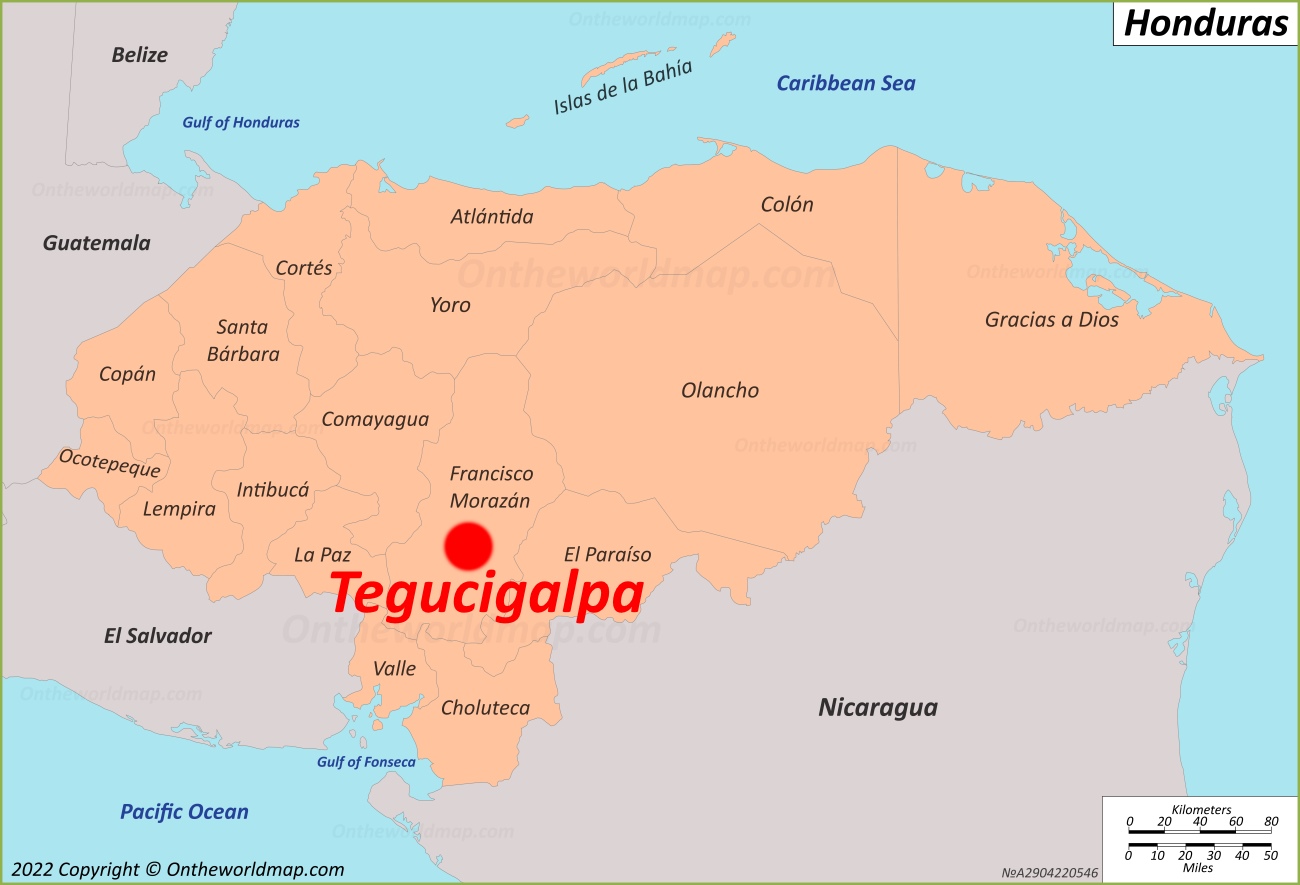
Online Map of Tegucigalpa
About Tegucigalpa
Tegucigalpa is the capital and largest city of Honduras, situated in a mountainous valley in the south-central part of the country at an elevation of approximately 990 meters (3,250 feet) above sea level.
The Facts:| Department: | Francisco Morazán |
| Districts: | Centro Histórico, Centro Contemporáneo, North Tegucigalpa, South Tegucigalpa, East Tegucigalpa, Comayagüela, North Comayagüela, South Comayagüela, West Comayagüela |
| Population (2023): | ~ 1,350,000 |
| Density: | 2,287/sq mi (883.1/sq km) |
| Area: | 580 sq mi (1,502 sq km) |
| Coordinates: | 14°06′21″N 87°12′17″W |
| Postal code: | 11101, 12101 |
The city was founded on September 29, 1578, initially as a mining settlement during the Spanish colonial period. Silver and gold extraction drove its early growth. Tegucigalpa officially became the national capital in 1880, replacing the former capital Comayagua.
The origin of the name is most commonly attributed to the Nahuatl language, with the most widely accepted interpretation being "silver hills" or "place of silver," reflecting the area's colonial mining history.
Administratively, Tegucigalpa forms the Municipio del Distrito Central together with the adjacent city of Comayagüela, from which it is separated by the Choluteca River. The two cities function as a unified metropolitan area, with a combined population exceeding 1.4 million as of recent estimates.
The city's Toncontín International Airport is widely regarded as one of the most challenging commercial airports in the world due to the surrounding mountain terrain, which forces aircraft to execute steep, sharp approaches during landing.
Tegucigalpa experiences a subtropical highland climate with a dry season from November to April and a wet season from May to October. Average annual temperatures remain around 21–23 °C (70–73 °F).
The city houses the main governmental institutions of Honduras, including the National Congress, the Supreme Court, and the presidential residence known as Casa Presidencial.
Main sights in Tegucigalpa
- National Identity Museum (Museo para la Identidad Nacional)
- La Tigra National Park
- Basilica of Suyapa
- Metropolitan Cathedral
- Central Park (Parque Central)
- Presidential Palace
- Chiminike Children's Museum
- Cristo del Picacho
- Picacho National Park
- United Nations Park
- La Leona Park
- National Art Gallery
- Military Museum
- La Merced Church
- Dolores Church
- National Theater Manuel Bonilla
- Villa Roy
- El Hatillo
- Santa Lucia
- Valle de Angeles
- Concordia Park
- Museum of National History
- San Francisco Church
- Souvenir Market
- Mercado San Isidro
- Cerro Juana Lainez
- Tegucigalpa Zoo
- Parque La Concordia
- Monumento a la Paz
- Estadio Nacional Chelato Uclés
Maps of Honduras
Cities of Honduras
Islands of Honduras