
Guanaja Map
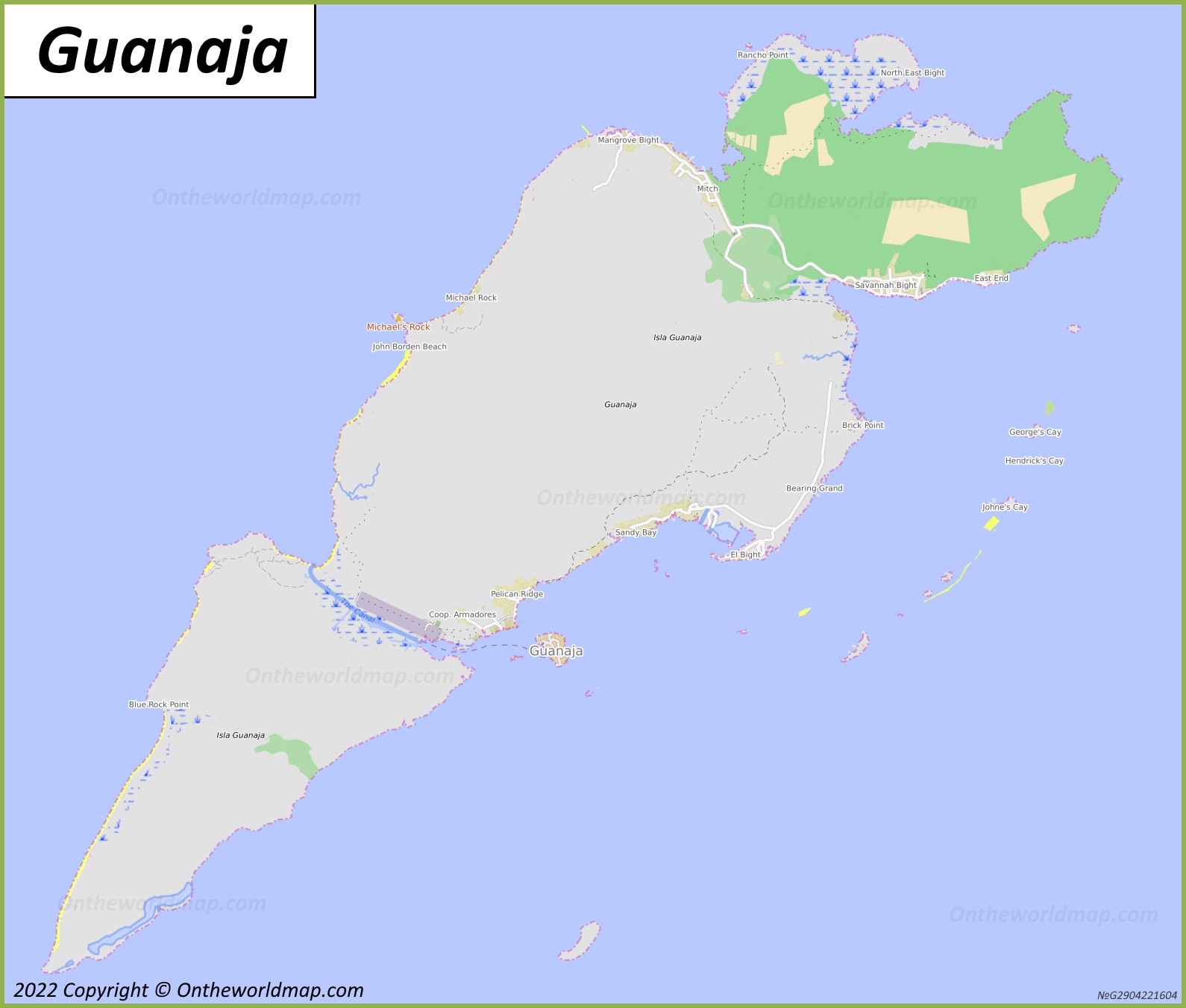
Description:
This map shows towns, villages, islands, roads, trails, beaches, rivers, buildings, airport, and ferry routes on Guanaja Island.
Size: 1590x1352px / 225 Kb
Author: Ontheworldmap.com
Map based on the free editable OSM map openstreetmap.org.
You may download, print or use the above map for educational, personal and non-commercial purposes. Attribution is required. For any website, blog, scientific research or e-book, you must place a hyperlink (to this page) with an attribution next to the image used.
Map of Bonacca

Description:
This map shows streets, houses, buildings, cafes, restaurants, hotels, churches, points of interest, piers, and ferry route in Bonacca.
Size: 1612x1814px / 504 Kb
Author: Ontheworldmap.com
Map based on the free editable OSM map openstreetmap.org.
You may download, print or use the above map for educational, personal and non-commercial purposes. Attribution is required. For any website, blog, scientific research or e-book, you must place a hyperlink (to this page) with an attribution next to the image used.
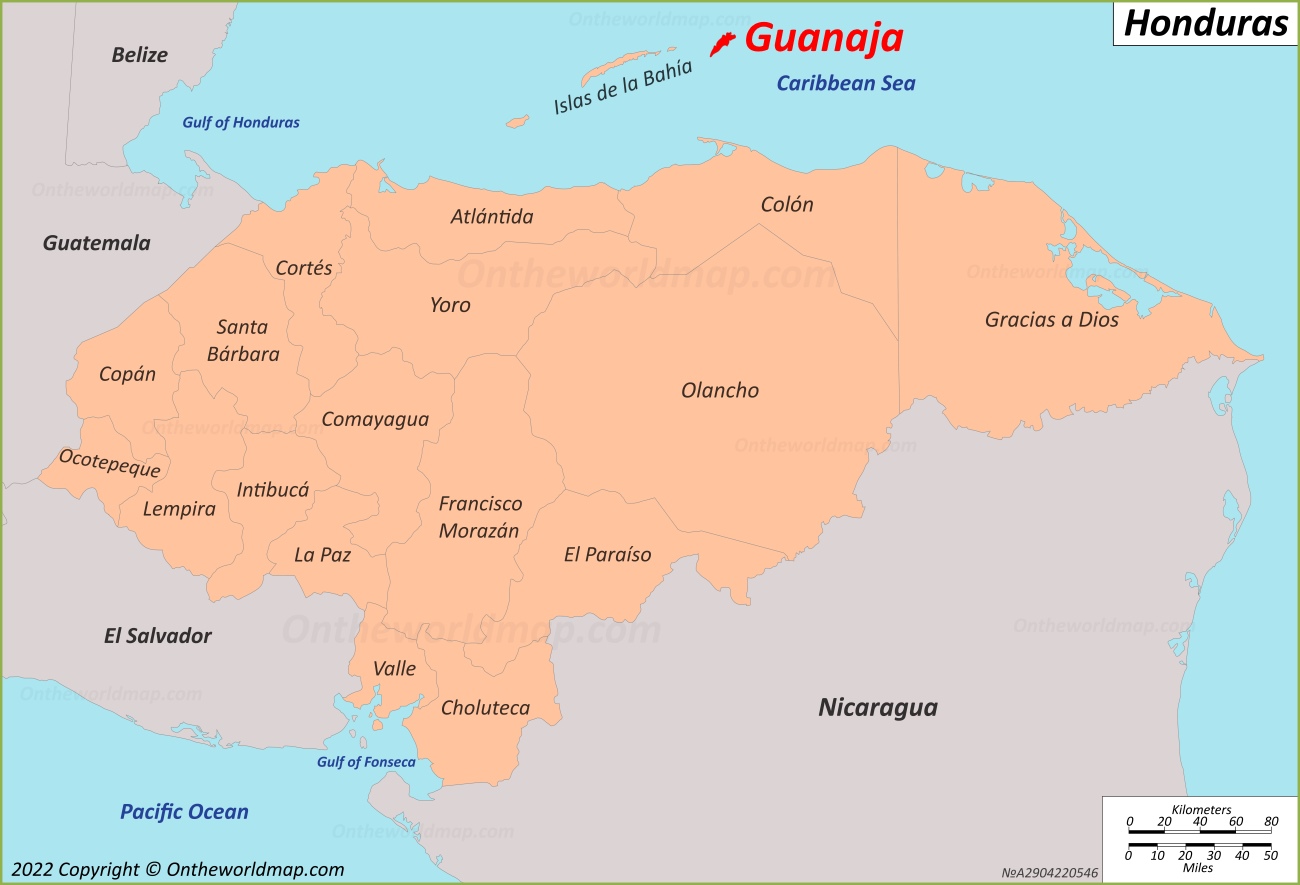
Online Map of Guanaja
About Guanaja
Guanaja is an island located in the Caribbean Sea, part of the Bay Islands department of Honduras. It is the easternmost of the three main Bay Islands, the other two being Roatán and Utila. The island lies approximately 65 kilometers northeast of La Ceiba on the Honduran mainland.
The Facts:| Department: | Bay Islands |
| Towns and villages: | Bonacca Town, Savannah Bight |
| Area: | 21 sq mi (55 sq km) |
| Population: | ~ 10,000 |
| Coordinates: | 16°28′N 85°53′W |
The total land area of Guanaja is about 55 square kilometers. The terrain is mountainous and heavily forested, with the highest peak reaching approximately 415 meters above sea level. Unlike the other Bay Islands, Guanaja retains extensive coverage of Caribbean pine trees, which gives it a distinctive appearance compared to its neighbors.
Christopher Columbus became the first European to reach Guanaja on July 30, 1502, during his fourth and final voyage to the Americas. He called it the "Island of Pines" due to its dense pine forests.
The main settlement is Bonacca, also known as Guanaja Town, which is not located on the main island itself but on a small adjacent cay. The town is known for its extremely high population density and a canal system used for local navigation. Guanaja has a population of approximately 10,000 to 13,000 people, with the majority residing in Bonacca and several smaller coastal communities.
One of the most significant events in the island's recent history was Hurricane Mitch in October 1998, which caused catastrophic destruction across Guanaja, devastating infrastructure, housing, and vegetation.
The island has no paved roads. All inter-community transportation is conducted by boat. The local economy relies primarily on commercial fishing and tourism, particularly scuba diving and snorkeling. Guanaja sits within the Mesoamerican Barrier Reef system, the second largest coral reef system in the world, which makes its surrounding waters a significant destination for marine tourism.
The island is administratively part of the Guanaja municipality within the Bay Islands department, and like the rest of the Bay Islands, has a population with mixed English-speaking Caribbean and Hispanic heritage.
Maps of Honduras
Cities of Honduras
Islands of Honduras