
La Ceiba Map
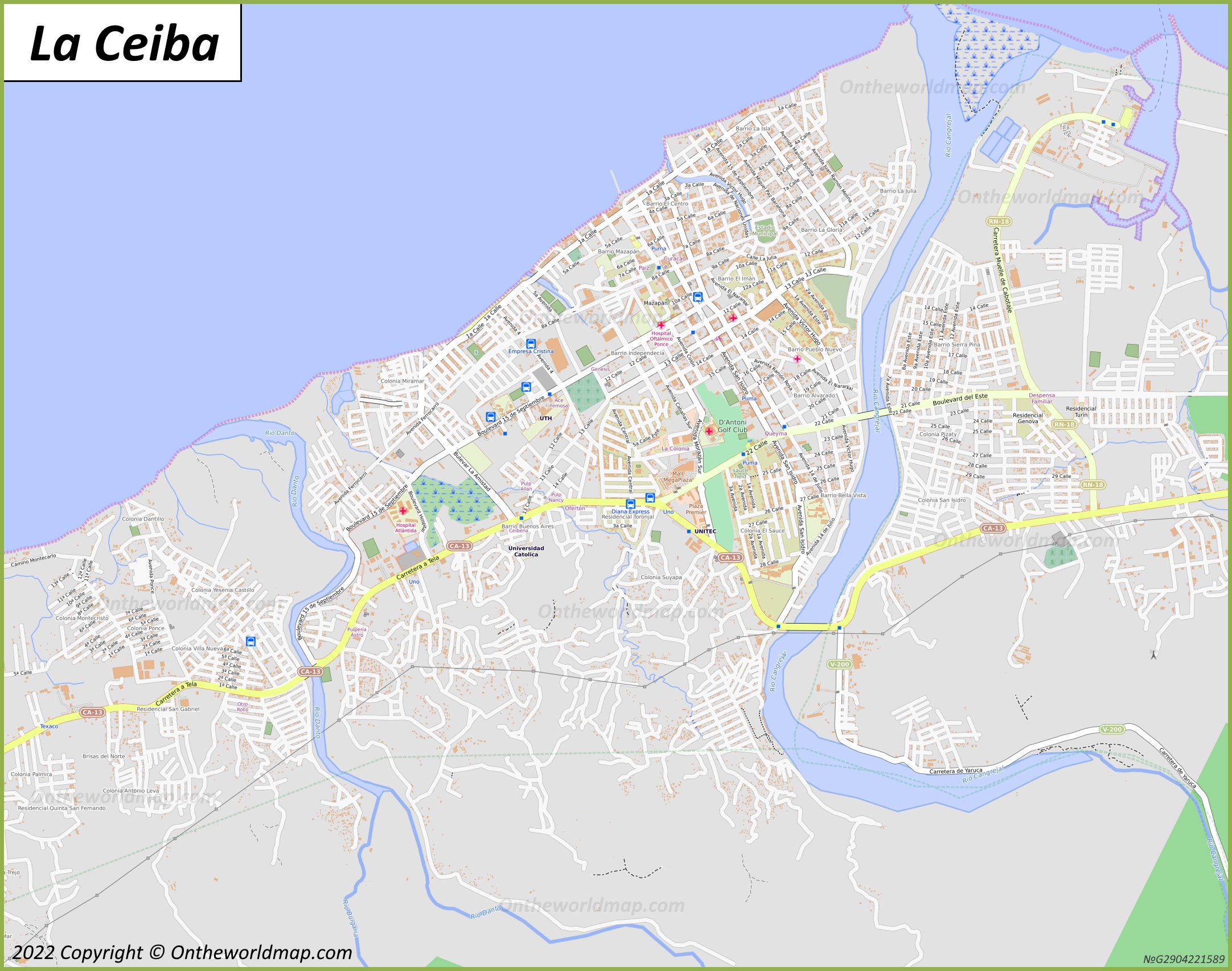
Description:
This map shows neighborhoods, streets, roads, beaches, hospitals, rivers, and parks in La Ceiba.
Size: 2164x1705px / 1.1 Mb
Author: Ontheworldmap.com
Map based on the free editable OSM map openstreetmap.org.
You may download, print or use the above map for educational, personal and non-commercial purposes. Attribution is required. For any website, blog, scientific research or e-book, you must place a hyperlink (to this page) with an attribution next to the image used.
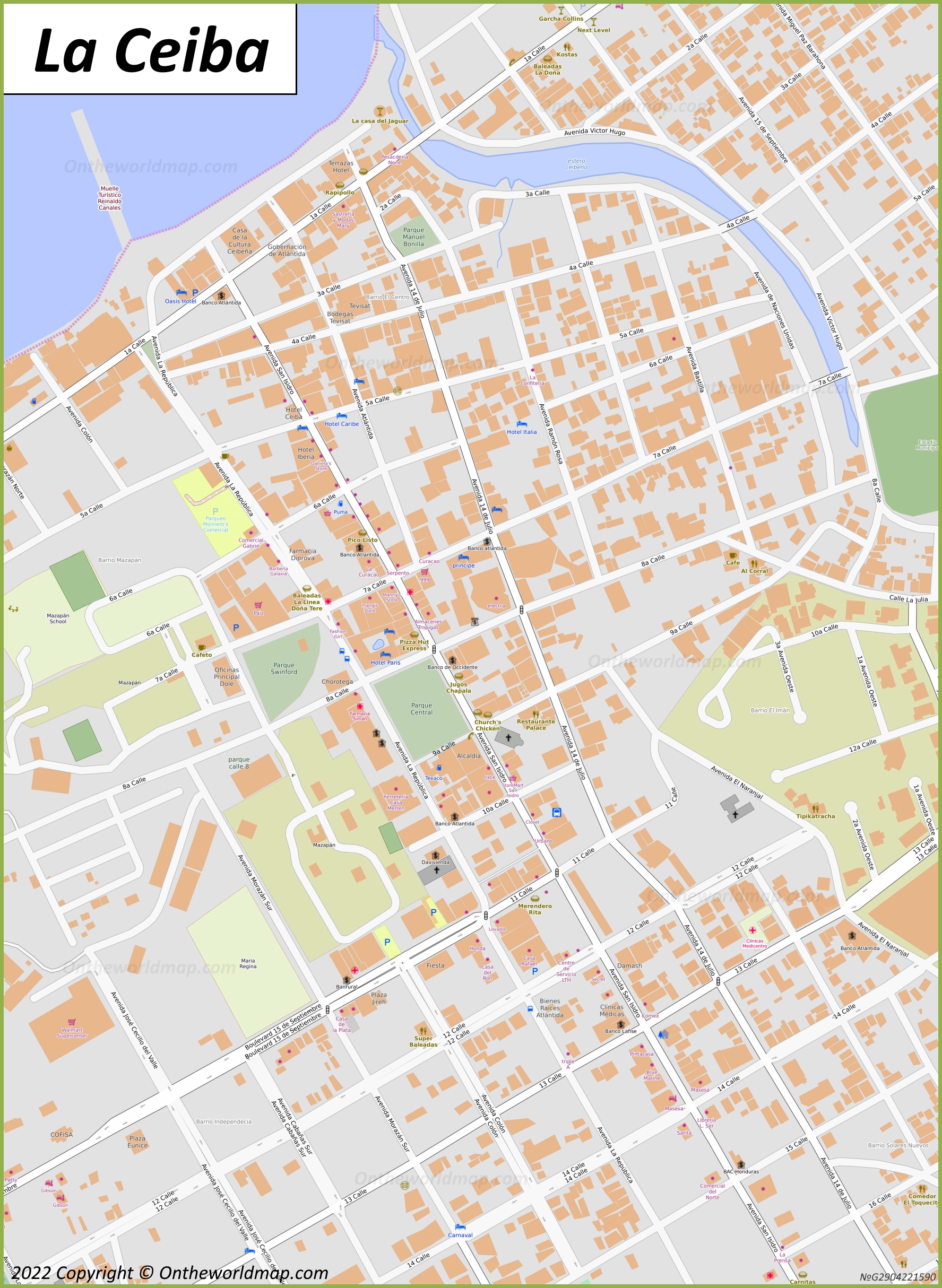
Description:
This map shows streets, houses, buildings, cafes, bars, restaurants, hotels, monuments, parking lots, shops, churches, points of interest, and parks in La Ceiba City Centre.
Size: 1775x2428px / 1.37 Mb
Author: Ontheworldmap.com
Map based on the free editable OSM map openstreetmap.org.
You may download, print or use the above map for educational, personal and non-commercial purposes. Attribution is required. For any website, blog, scientific research or e-book, you must place a hyperlink (to this page) with an attribution next to the image used.
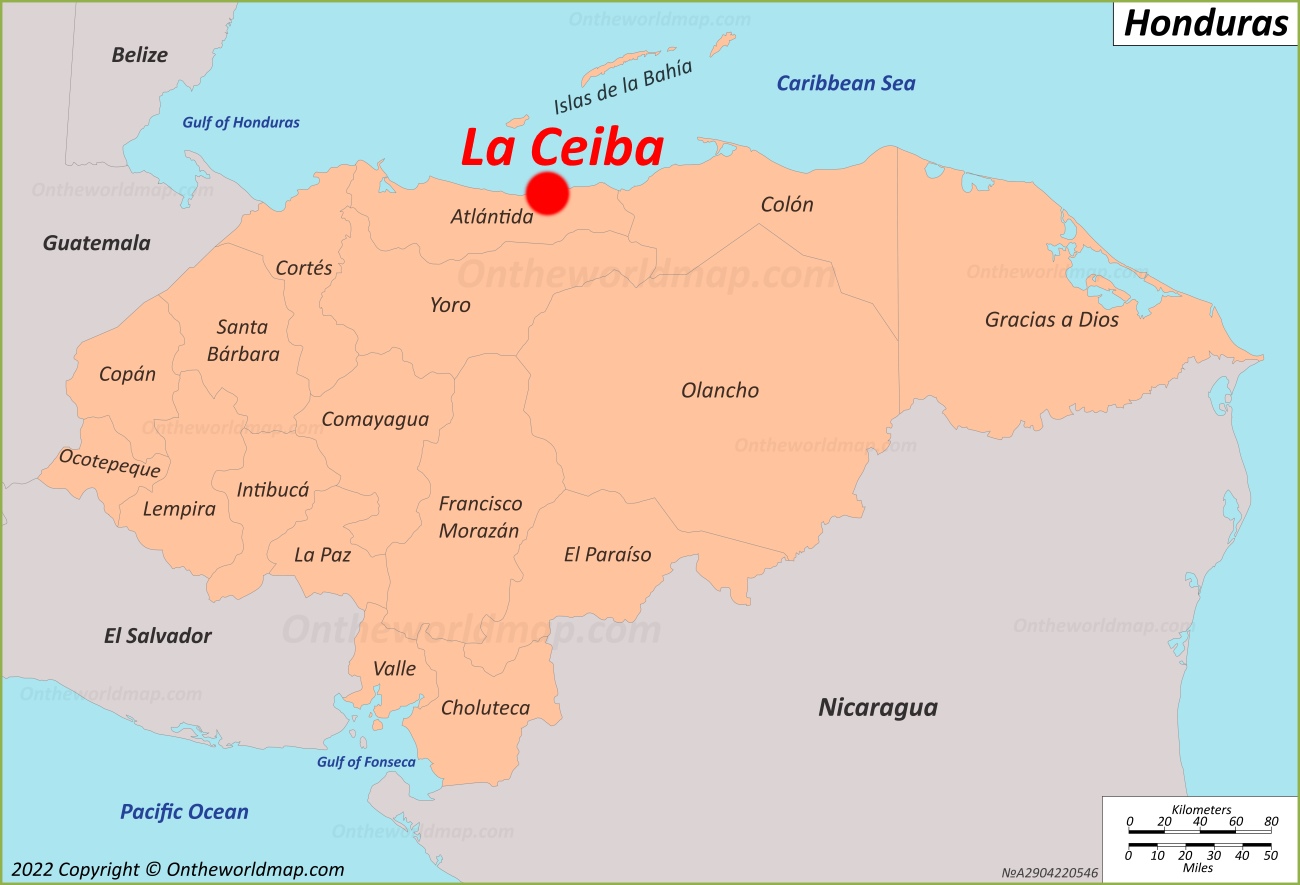
Online Map of La Ceiba
About La Ceiba
La Ceiba is a city located on the northern Caribbean coast of Honduras, serving as the capital of the Atlántida Department. It lies between the Caribbean Sea to the north and the Nombre de Dios mountain range to the south.
The Facts:| Department: | Atlántida |
| Population (2023): | ~ 215,973 |
| Density: | 10,700/sq mi (4,100/sq km) |
| Area: | 23 sq mi (60 sq km) |
| Coordinates: | 15°46′45″N 86°47′35″W |
The city takes its name from a large ceiba tree (Ceiba pentandra) that once stood near the original wooden dock used by early settlers and traders in the late 19th century.
La Ceiba developed significantly during the early 20th century due to the banana industry. The Standard Fruit Company, later known as Dole Food Company, established major operations in the region, making the city an important export hub for banana shipments across the Caribbean and to the United States. This period of agricultural commerce shaped much of the city's urban layout and infrastructure.
The population of La Ceiba is approximately 174,000 within the city proper, making it the third-largest city in Honduras after Tegucigalpa and San Pedro Sula.
La Feria Internacional de La Ceiba, held annually in May, is one of the largest carnivals in Central America. The festival draws hundreds of thousands of visitors each year and is centered around the third week of May, culminating on the Saturday closest to May 22, the feast day of San Isidro, the city's patron saint.
The city serves as the primary gateway to the Bay Islands (Islas de la Bahía), including Roatán, Utila, and Guanaja, via both ferry and air connections. Golosón International Airport provides domestic and limited international flights.
Pico Bonito National Park, located just south of the city, covers approximately 1,070 square kilometers and contains one of the most biodiverse ecosystems in Honduras. The Río Cangrejal, which flows through the park toward the Caribbean, is widely regarded as one of the best whitewater rafting destinations in Central America.
La Ceiba has a tropical rainforest climate, with high humidity and rainfall distributed throughout the year.
Main sights in La Ceiba
- Pico Bonito National Park
- Cangrejal River
- Cuero y Salado Wildlife Refuge
- Cayos Cochinos (Hog Islands)
- Nombre de Dios National Park
- La Ceiba Carnival
- Cathedral of San Isidro
- Parque Central Manuel Bonilla
- The Malecón (Beachfront Boulevard)
- Museo de la Mariposa (Butterfly Museum)
- Playa de Perú
- Sambo Creek
- Cascadas de Zacate
- Rio Maria Waterfall
- Corozal Beach
- Lancetilla Botanical Garden
- El Bejuco Waterfall
- Mega Plaza Shopping Mall
- Estadio Ceibeño
- Zona Viva (Nightlife District)
Maps of Honduras
Cities of Honduras
Islands of Honduras