
Quetzaltenango Map
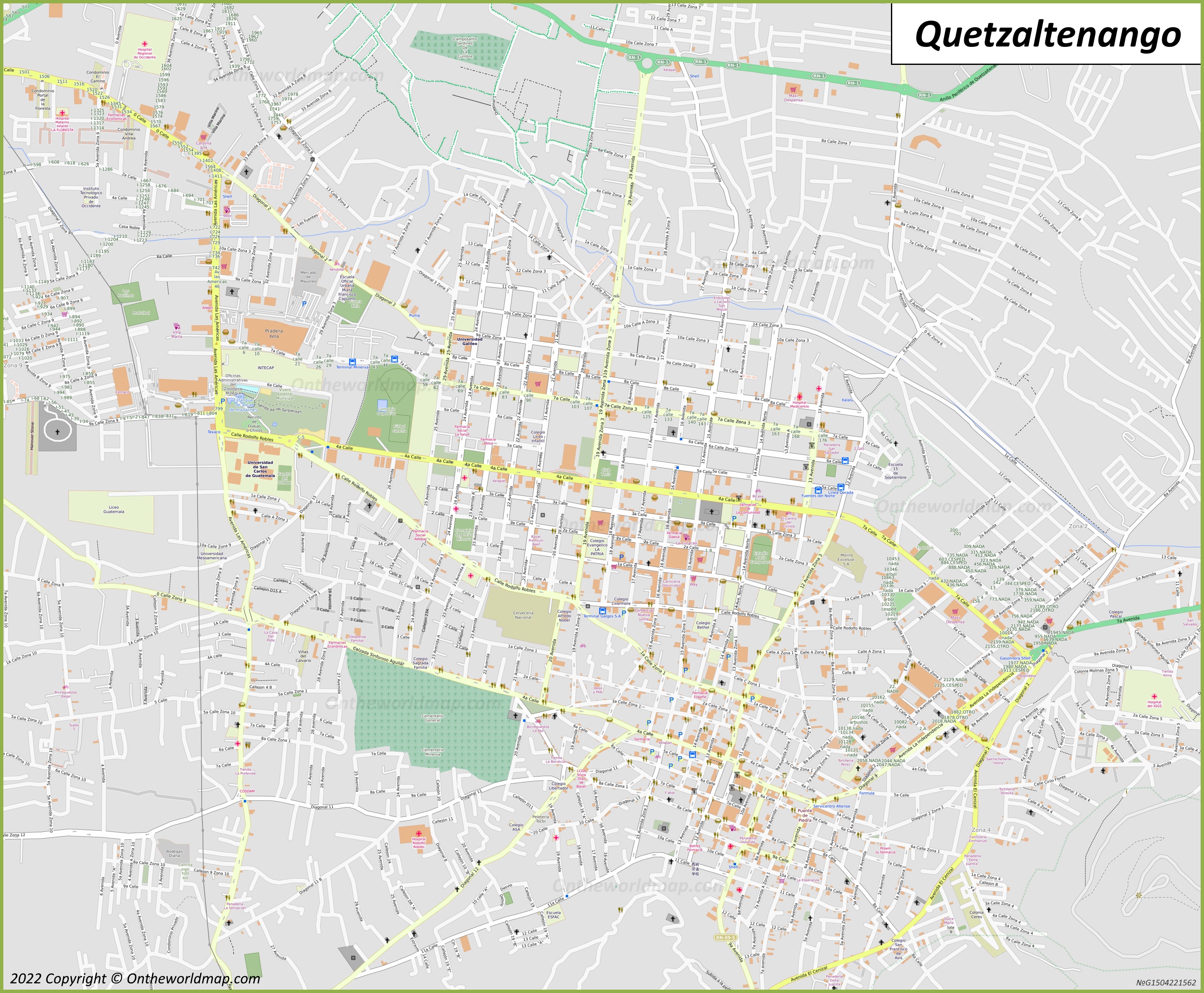
Description:
This map shows streets, roads, rivers, buildings, restaurants, churches, and parks in Quetzaltenango.
Size: 2877x2372px / 2.25 Mb
Author: Ontheworldmap.com
Map based on the free editable OSM map openstreetmap.org.
You may download, print or use the above map for educational, personal and non-commercial purposes. Attribution is required. For any website, blog, scientific research or e-book, you must place a hyperlink (to this page) with an attribution next to the image used.
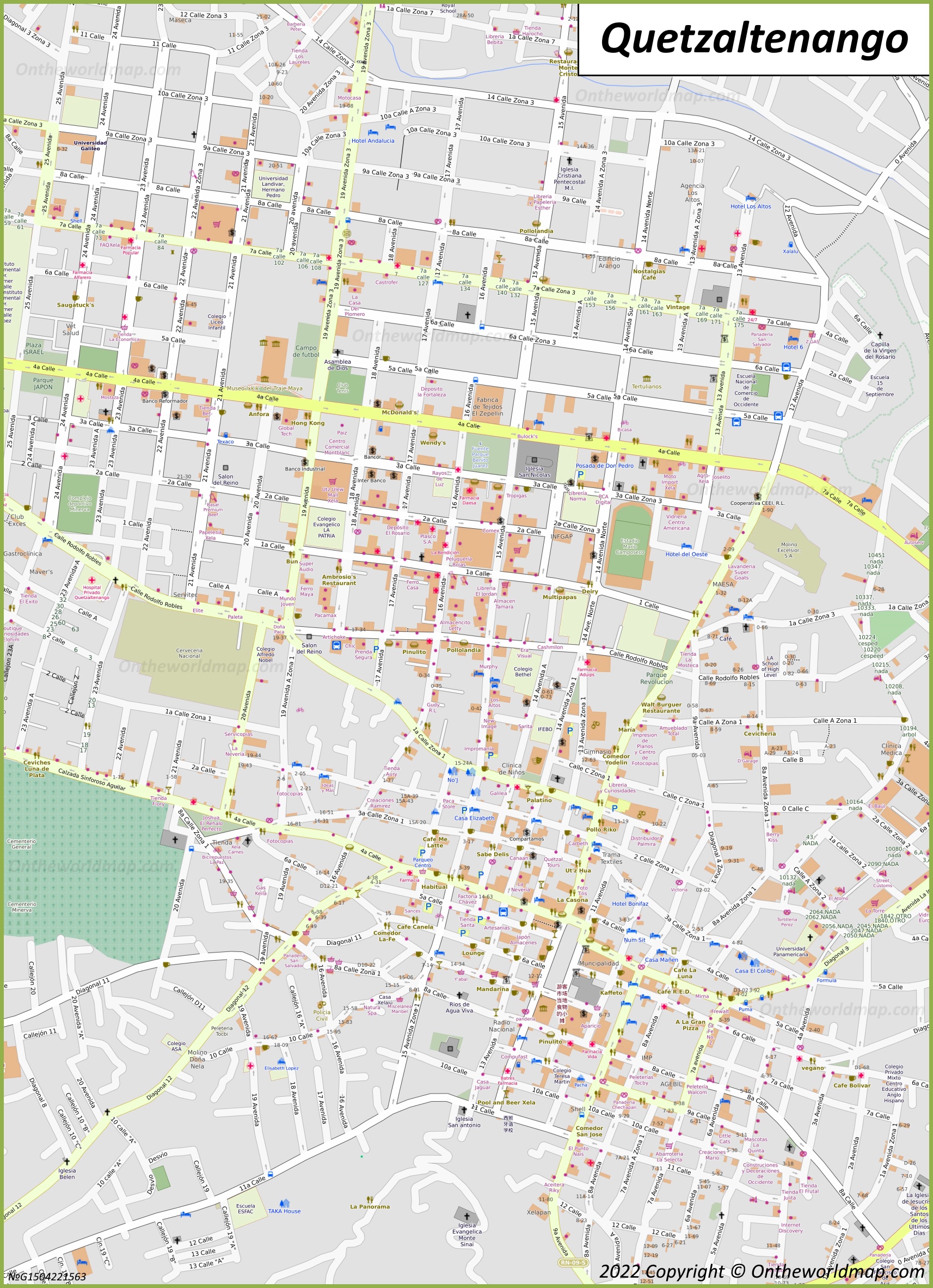
Description:
This map shows streets, buildings, cafes, bars, restaurants, hotels, monuments, parking lots, shops, churches, points of interest, and parks in Quetzaltenango City Centre.
Size: 1714x2365px / 1.57 Mb
Author: Ontheworldmap.com
Map based on the free editable OSM map openstreetmap.org.
You may download, print or use the above map for educational, personal and non-commercial purposes. Attribution is required. For any website, blog, scientific research or e-book, you must place a hyperlink (to this page) with an attribution next to the image used.
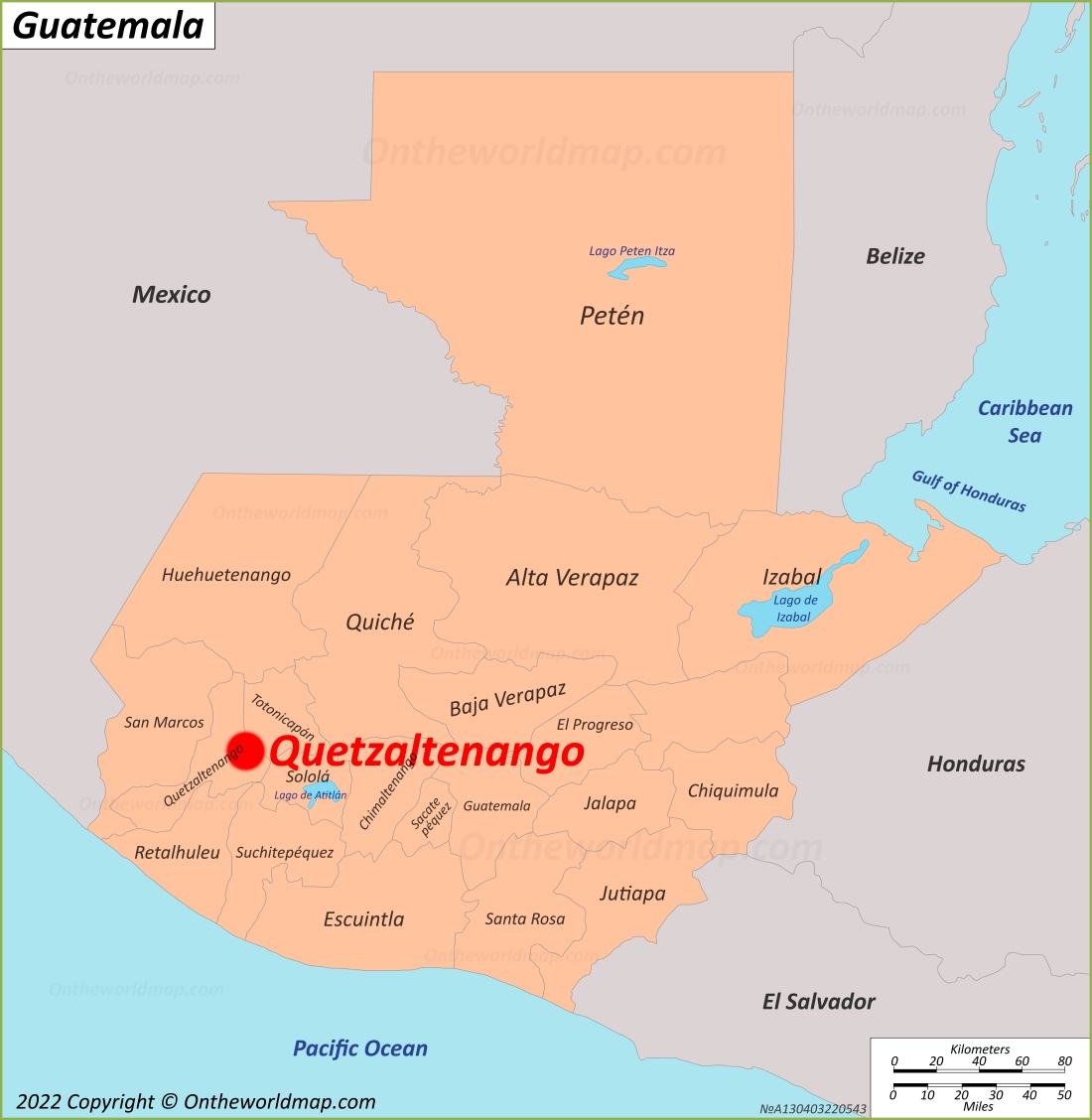
Online Map of Quetzaltenango
About Quetzaltenango
Quetzaltenango is the second-largest city in Guatemala and the capital of the Quetzaltenango Department. It is commonly known by its indigenous name Xela, derived from the K'iche' Mayan name Xelajú.
The city is situated in the western highlands of Guatemala at an elevation of approximately 2,333 metres (7,654 feet) above sea level. This altitude gives Quetzaltenango a temperate climate, considerably cooler than Guatemala City, with a distinct dry season from November to April and a rainy season from May to October. The surrounding landscape is dominated by volcanic peaks, most notably Santa María volcano, which erupted catastrophically in 1902, causing widespread destruction across the region.
| Department: | Quetzaltenango |
| Population: | ~ 180,000 |
| Metropolitan population (2023): | ~ 750,000 |
| Area: | 3,840 sq mi (1,480 sq km) |
| Coordinates: | 14°50′40″N 91°30′05″W |
The name Quetzaltenango is derived from the Nahuatl language and translates roughly as "place of the quetzal fortress." The indigenous K'iche' Maya were the dominant population of the area before the Spanish conquest in the early 16th century.
Between 1838 and 1840, Quetzaltenango served as the capital of the short-lived independent state of Los Altos, which briefly seceded from the Central American Federation before being reincorporated into Guatemala.
The city functions as the primary commercial, educational, and cultural hub for western Guatemala. Its economy is based on trade, textile production, and food processing. Quetzaltenango is also widely recognized as a center for Spanish-language education, hosting numerous language schools that attract international students. The city's Parque Centro América, one of the largest central plazas in Central America, is flanked by the neoclassical Cathedral of Quetzaltenango and several governmental buildings dating to the 19th and early 20th centuries.
The municipal population is approximately 180,000, with the greater metropolitan area exceeding 330,000 inhabitants.
Main sights in Quetzaltenango
- Parque Centro América
- Cathedral of the Espíritu Santo
- Casa de la Cultura
- Teatro Municipal
- Natural History Museum
- Santa María Volcano
- Cerro Quemado
- Fuentes Georginas Hot Springs
- Los Vahos Natural Sauna
- La Pedrera
- Pasaje Enríquez
- Municipal Market
- Museo Ixkik' del Traje Maya
- Parque Benito Juárez
- Cerro El Baúl
- Iglesia de San Nicolás
- Almolonga Hot Springs
- Salcajá Church
- Mercado La Democracia
- Siete Orejas Volcano
Maps of Guatemala
Cities of Guatemala