
Christiansted Map
Description:
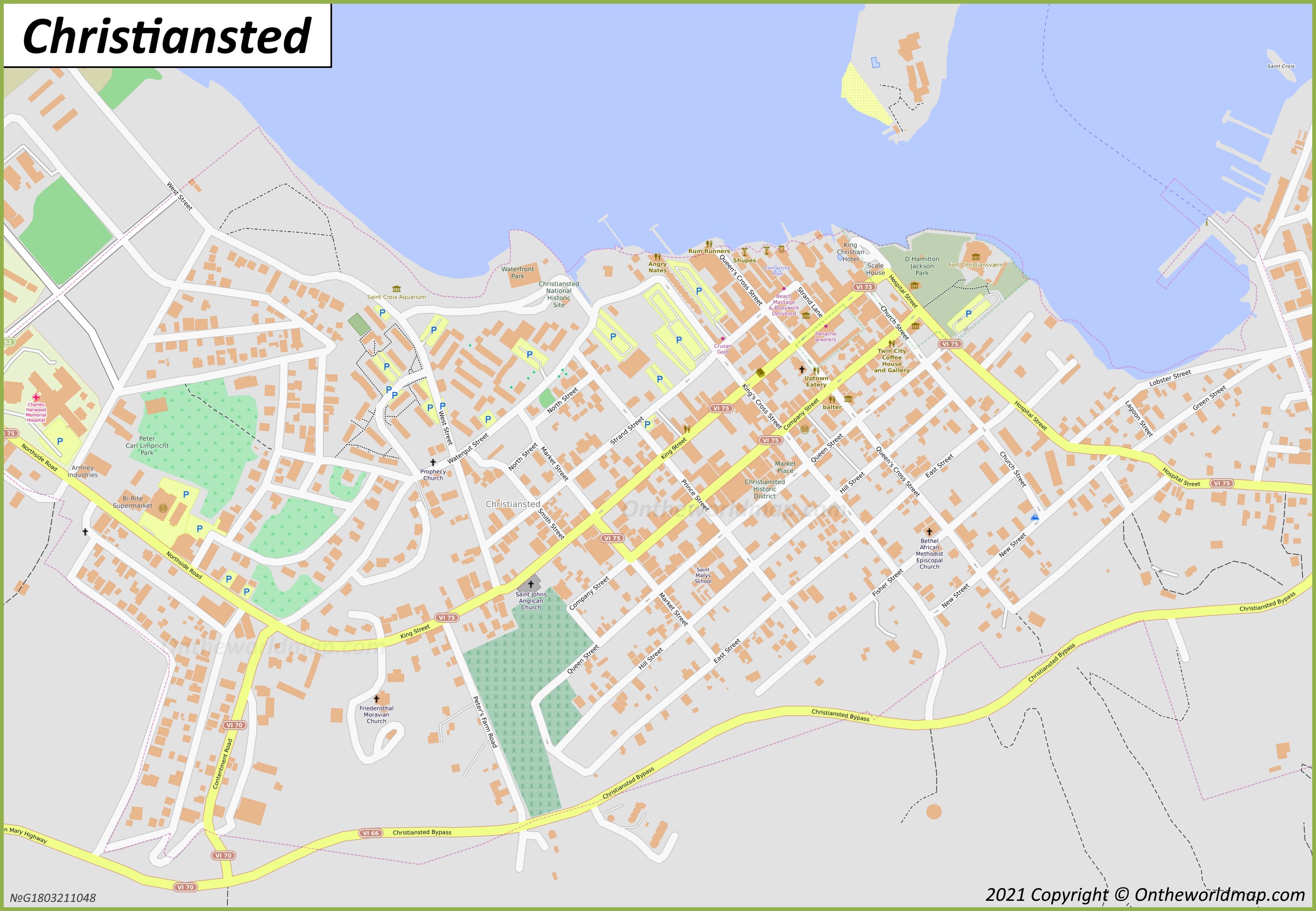
This map shows streets, roads, trails, buildings, cafes, bars, restaurants, hotels, monuments, museums, parking lots, shops, churches, points of interest, and parks in Christiansted.
Size: 2461x1703px / 1.01 Mb
Author: Ontheworldmap.com
Map based on the free editable OSM map openstreetmap.org.
You may download, print or use the above map for educational, personal and non-commercial purposes. Attribution is required. For any website, blog, scientific research or e-book, you must place a hyperlink (to this page) with an attribution next to the image used.
Online Map of Christiansted
About Christiansted
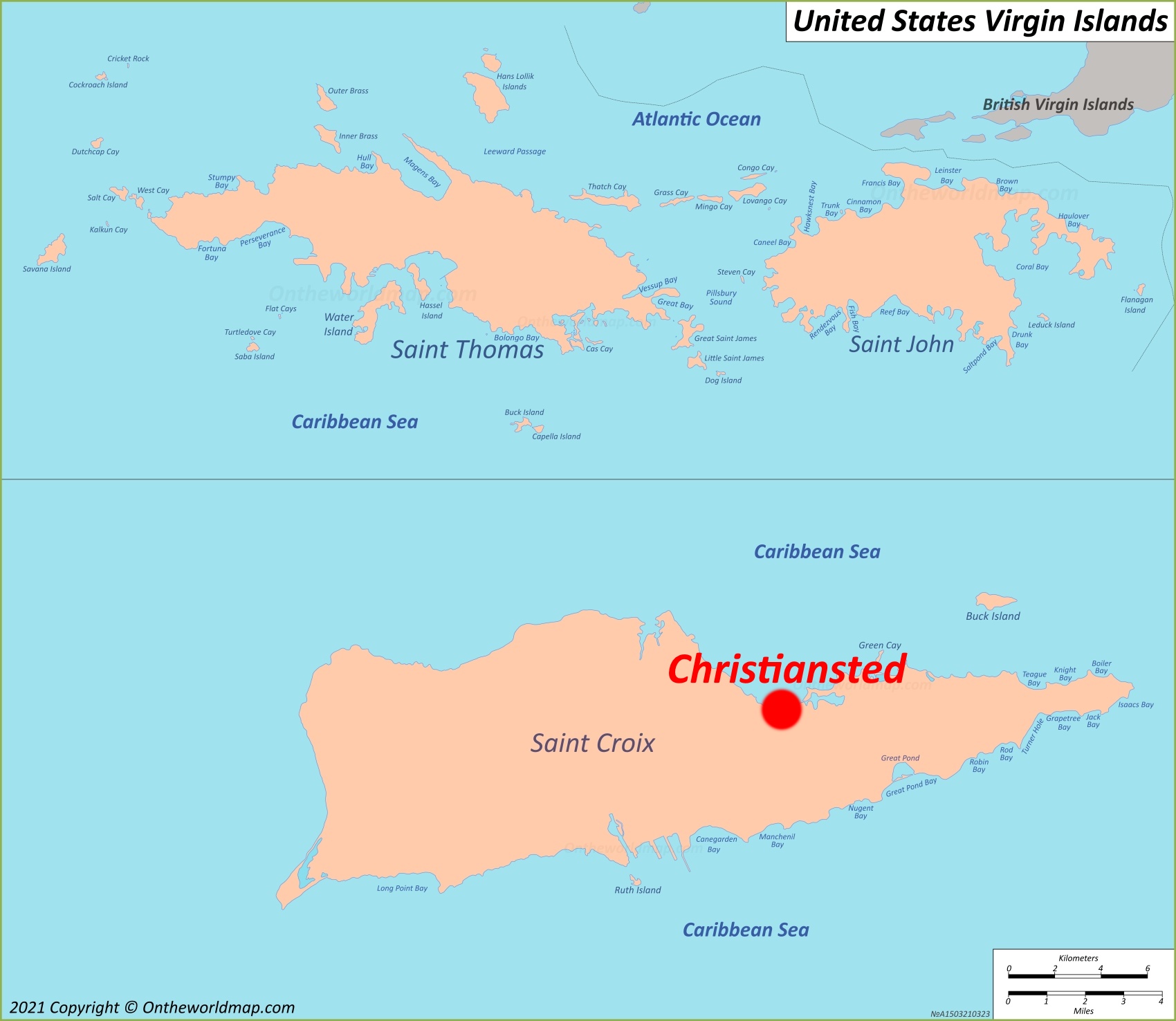
Christiansted is the largest town on Saint Croix, U.S. Virgin Islands, and serves as the island's commercial and administrative center. Located on the northeastern shore of Saint Croix, Christiansted features one of the best-preserved Danish colonial town centers in the Caribbean. The town's historic district contains numerous 18th and 19th-century buildings that reflect its significance during the Danish colonial period.
The Facts:
| Sovereign state: | United States |
| Territory: | U.S. Virgin Islands |
| Island: | Saint Croix |
| Population (2020): | 1,866 |
| Coordinates: | 17.75°N 64.75°W |
| Racial/ethnic groups (2020): |
|
| ZIP Codes: | 00820–00824 |
History
The town was established in 1735 by the Danish West India and Guinea Company on land purchased from the French. It was named after King Christian VI of Denmark. Christiansted quickly became the capital of the Danish West Indies and the center of colonial administration. During the 18th century, the town prospered through the sugar trade, with Saint Croix becoming one of the most profitable colonies in the Caribbean. Enslaved Africans provided the labor force for the sugar plantations that dominated the island's economy.
The town's strategic harbor and commercial importance attracted merchants, traders, and government officials. By the late 18th and early 19th centuries, Christiansted had developed into a sophisticated colonial town with substantial stone buildings, fortifications, and public spaces. The wealth generated by sugar cultivation funded the construction of many buildings that remain standing today.
Following emancipation in 1848, the economic structure of Saint Croix changed significantly, leading to a gradual decline in the sugar industry. The United States purchased the Danish West Indies, including Saint Croix, in 1917. Christiansted continued as the primary town on Saint Croix and remains its commercial hub.
Historic District and Architecture
The Christiansted National Historic Site, established by the U.S. Congress in 1952, preserves seven acres of the colonial town center. Fort Christiansvaern, completed in 1749, served as the main fortification protecting the harbor. The fort features characteristic Danish military architecture with yellow walls made from ballast brick and coral. It remains one of the best-preserved Danish fortifications in the Caribbean.
The Steeple Building, constructed between 1753 and 1794, originally served as the Danish Lutheran Church before being converted to various uses including a hospital and bakery. Its distinctive steeple makes it a prominent landmark. The building now functions as a museum operated by the National Park Service.
The Old Scale House, built in 1856, was used to weigh goods imported and exported through the port. The Danish West India and Guinea Company Warehouse, dating to the 1740s, is one of the oldest structures in the historic district. Government House, completed in 1830, originally served as administrative offices and the residence of Danish officials. The building continues to serve governmental functions and features neoclassical architecture with a distinctive arcade.
The Old Danish Customs House, constructed around 1830, exemplifies Danish colonial administrative architecture. Company Street and King Street contain numerous historic commercial buildings with arcaded sidewalks, providing covered walkways that were practical in the tropical climate.
Geography and Climate
Christiansted is situated on a natural harbor that provided protection for vessels and facilitated trade during the colonial era. The town center occupies relatively flat terrain near the waterfront, with the land rising gradually toward the interior of the island. The climate is tropical, moderated by trade winds, with temperatures remaining warm throughout the year. The hurricane season extends from June through November.
Economy
As the primary commercial center of Saint Croix, Christiansted's economy encompasses retail, tourism, professional services, and government administration. The historic waterfront area features shops, restaurants, and art galleries that cater to tourists and residents. Hotels and guest houses provide accommodation throughout the town and nearby areas.
The harbor serves recreational boaters, charter operations, and ferry services. Seaplanes provide transportation between Saint Croix and other islands from the Christiansted harbor. Banking, legal services, and other professional offices are concentrated in and around the town center.
The Crucian Rum Distillery, located near Christiansted, produces rum and offers tours, contributing to the local economy and tourism industry. Various festivals and cultural events throughout the year attract visitors and support local businesses.
Culture and Community
Christiansted reflects the diverse cultural heritage of Saint Croix, with influences from African, Danish, and other Caribbean cultures. The population is predominantly of African Caribbean descent. English is the primary language, with many residents also speaking Creole.
The town hosts numerous cultural events, including Jump Up, a street festival featuring music, food, and entertainment. The Agricultural Fair, held annually, showcases local produce, livestock, and traditional crafts. The Crucian Christmas Festival includes parades, calypso competitions, and food fairs.
Education and Services
Several schools serve Christiansted and the surrounding areas, including public schools operated by the Virgin Islands Department of Education and private institutions. The University of the Virgin Islands maintains administrative offices in Christiansted, with the main Saint Croix campus located in the vicinity. The Juan F. Luis Hospital and Medical Center, located near Christiansted, provides healthcare services for Saint Croix.
Transportation
The Henry E. Rohlsen Airport, located on the southwestern side of Saint Croix, provides air service to the U.S. mainland and other Caribbean destinations. Taxi services and rental cars provide ground transportation. The waterfront hosts seaplane services and ferry operations connecting to other islands. The road network links Christiansted to other parts of Saint Croix, including Frederiksted on the western end of the island.
Main sights in Christiansted
- Fort Christiansvaern
- Christiansted National Historic Site
- Steeple Building
- Government House
- Old Danish Customs House
- Protestant Cay
- Scale House
- Christiansted Boardwalk
- St. John's Anglican Church
- Alexander Hamilton House
- D. Hamilton Jackson Park
- Apothecary Hall
- Market Square
- Company Street
Maps of U.S. Virgin Islands
Islands
Cities