
Newfoundland and Labrador Map

Description:
This map shows cities, towns, province capital, islands, rivers, lakes, highways, and major roads in Newfoundland and Labrador.
Size: 1600x2095px / 889 Kb
Author: Ontheworldmap.com
You may download, print or use the above map for educational, personal and non-commercial purposes. Attribution is required. For any website, blog, scientific research or e-book, you must place a hyperlink (to this page) with an attribution next to the image used.
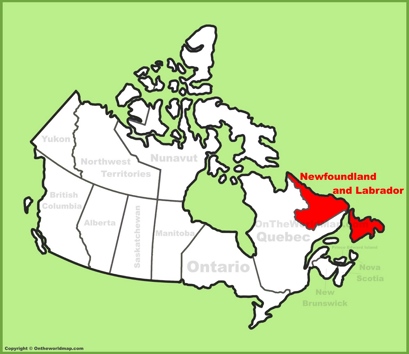
Online Map of Newfoundland and Labrador
Maps of Newfoundland and Labrador

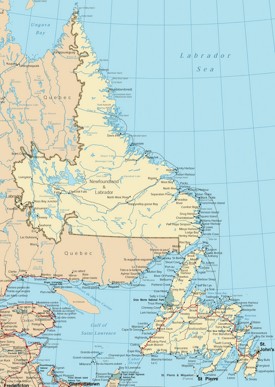


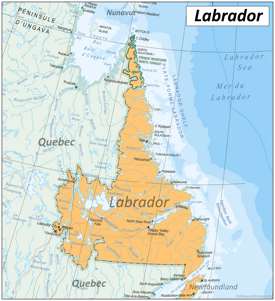
Maps of Labrador

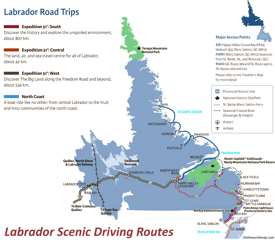
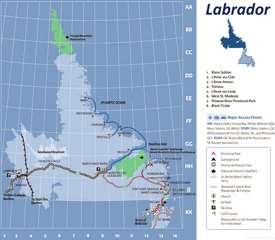
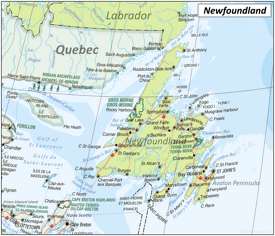
Maps of Newfoundland

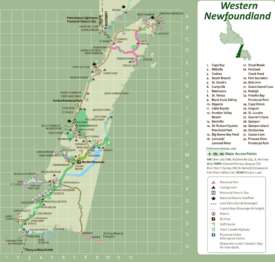
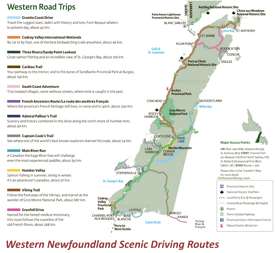
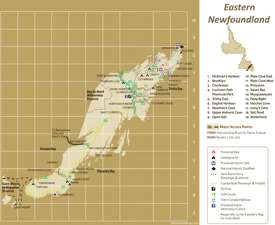
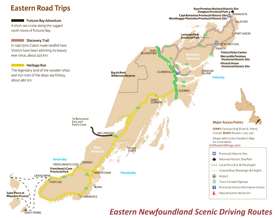
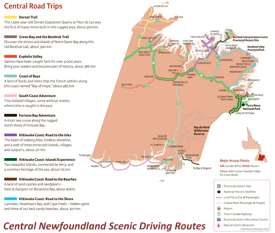
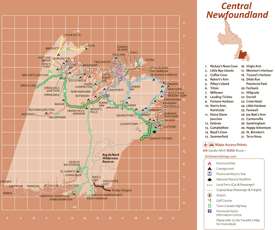
Maps of Avalon
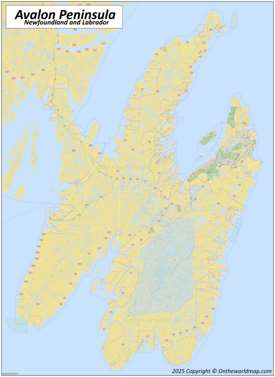
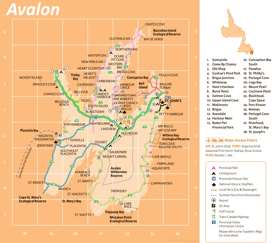
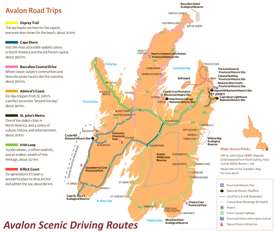
Maps of Newfoundland and Labrador and Neighboring Provinces


About Newfoundland and Labrador
Newfoundland and Labrador is the easternmost province of Canada, composed of the island of Newfoundland and the continental region of Labrador. The province joined the Canadian Confederation on March 31, 1949, becoming Canada's tenth province. It is the youngest province in Canada and was the last to join Confederation.
Geography
The province covers an area of approximately 405,212 square kilometers, making it the tenth-largest subdivision by area in Canada. Newfoundland and Labrador consists of two distinct geographical regions: the island of Newfoundland, located in the Atlantic Ocean, and Labrador, which is attached to the mainland of North America. The Strait of Belle Isle separates the island from Labrador to the north.
The province's coastline is highly irregular and extends for approximately 17,540 kilometers. The landscape is characterized by rugged terrain, numerous fjords, bays, and inlets. The interior regions feature boreal forests, barren lands, and numerous lakes and rivers.
Demographics and Major Cities
As of 2025, the population of Newfoundland and Labrador was approximately 549,911, making it the ninth-most populous province in Canada. The capital and largest city is St. John's, located on the Avalon Peninsula of Newfoundland. St. John's is the most easterly city in North America and serves as the economic, cultural, and administrative center of the province.
Other significant population centers include Mount Pearl, Corner Brook, Conception Bay South, and Paradise. The majority of the population resides on the island of Newfoundland, with a smaller population distributed throughout Labrador. The province has experienced population decline in recent decades due to outmigration, particularly among younger residents seeking employment opportunities elsewhere.
Economy
Historically, the economy of Newfoundland and Labrador was heavily dependent on the cod fishery, which collapsed in 1992 due to overfishing. The province's economy has since diversified significantly. The offshore oil and gas industry has become a major economic driver, with significant production from fields such as Hibernia, Terra Nova, and Hebron.
Mining represents another crucial sector, with significant iron ore production in Labrador, particularly from the Labrador Trough. The province also produces nickel, copper, and gold. Hydroelectricity generation, especially from the Churchill Falls facility in Labrador, contributes substantially to the economy, though most of the power is exported to Quebec under a long-term contract.
Tourism has grown in importance, with visitors attracted to the province's natural beauty, icebergs, whale watching, and cultural heritage sites such as L'Anse aux Meadows, the only authenticated Norse settlement in North America.
History
The area has been inhabited for thousands of years, first by indigenous peoples including the Beothuk on the island and the Innu and Inuit in Labrador. European contact began around 1000 CE with Norse explorers who established a settlement at L'Anse aux Meadows. Permanent European settlement began in the early 16th century, primarily by English and Irish fishermen.
Newfoundland operated as a British colony and later as a self-governing dominion until 1934, when financial difficulties during the Great Depression led to the suspension of self-government and the establishment of the Commission of Government. Following two referendums in 1948, the territory narrowly voted to join Canada, officially becoming a province in 1949. Labrador, which had been governed separately as part of Quebec until 1927, was incorporated into the new province.
Climate
The climate varies significantly between the island and Labrador. Newfoundland experiences a cool maritime climate influenced by the Atlantic Ocean and the Labrador Current, which brings cold water and icebergs southward. Summers are cool and winters are relatively mild compared to other Canadian regions at similar latitudes, though the weather is highly variable and precipitation is abundant throughout the year.
Labrador has a more continental climate with greater temperature extremes, particularly in the interior regions. Winters are long and harsh, while summers are short and cool. Coastal Labrador is influenced by the Atlantic but still experiences colder conditions than the island of Newfoundland.
The Facts:
| Capital: | St. John's |
| Largest city: | St. John's |
| Population (Q3 2025): | 549,911[1] |
| Area: | 156,453 sq mi (405,212 sq km) |
| Density: | 3.5/sq mi (1.37/sq km) |
| Official languages: | English |
| Coordinates: | 53°13′48″N 59°59′57″W |
| Gross domestic product (Total): | CA$33.624 billion |
| Gross domestic product (Per capita): | CA$65,556 |
| Time zone: |
Newfoundland - UTC-03:30 (Newfoundland Time Zone) Labrador (Black Tickle and North) - UTC-04:00 (Atlantic Time Zone) |
| Canadian postal abbr.: | NL |
| Postal code prefix: | A |
| ISO 3166 code: | CA-NL |
| Flower: | Pitcher plant |
| Tree: | Black spruce |
| Bird: | Atlantic puffin |
| Official Website: | www.gov.nl.ca |
Google Map of Newfoundland and Labrador
List of the Largest Cities and Towns in Newfoundland and Labrador
- St. John's
- Conception Bay South
- Paradise
- Mount Pearl
- Corner Brook
- Grand Falls-Windsor
- Gander
- Portugal Cove–St. Philip's
- Happy Valley-Goose Bay
- Torbay
- Labrador City
- Clarenville
- Stephenville
- Bay Roberts
- Marystown
- Deer Lake
- Carbonear
- Channel-Port aux Basques
- Pasadena
- Placentia
- Lewisporte
- Bonavista
- Bishop's Falls
- Springdale
- Harbour Grace
- Botwood
- Spaniard's Bay
- Holyrood
- Logy Bay-Middle Cove-Outer Cove
- Burin
- St. Anthony
- Grand Bank
- Twillingate
- Fogo Island
- Pouch Cove
- New-Wes-Valley
- Wabush
- Glovertown
- Kippens
- Gambo
- Wabana
- Flatrock
- Victoria
- Trinity Bay North
- Witless Bay
- Stephenville Crossing
- Massey Drive
- Bay Bulls
- Humber Arm South
- Harbour Breton
- Upper Island Cove
- Clarke's Beach
- Baie Verte
- Fortune
- Irishtown-Summerside
- Nain
- St. Alban's
- Burgeo
- St. George's
- Centreville-Wareham-Trinity
- St. Lawrence
- Harbour Main-Chapel's Cove-Lakeview
Main sights in Newfoundland and Labrador
- Signal Hill National Historic Site
- Cape Spear Lighthouse National Historic Site
- Gros Morne National Park
- L'Anse aux Meadows National Historic Site
- Witless Bay Ecological Reserve
- Twillingate
- Fogo Island
- Bonavista Peninsula
- Elliston
- Terra Nova National Park
- Torngat Mountains National Park
- Battle Harbour National Historic District
- Red Bay National Historic Site
- The Tablelands
- Western Brook Pond
- Cape St. Mary's Ecological Reserve
- Quidi Vidi Village
- The Rooms
- Cape Bonavista Lighthouse Provincial Historic Site
- Dungeon Provincial Park
- Skerwink Trail
- Ferryland Lighthouse
- Mistaken Point Ecological Reserve
- Jellybean Row
- East Coast Trail
- Castle Hill National Historic Site
- Point Amour Lighthouse Provincial Historic Site
- Port au Choix National Historic Site
- Ryan Premises National Historic Site
- Hawthorne Cottage National Historic Site
Major Rivers of Newfoundland and Labrador
- Churchill River - 532 mi (856 km)
- George River - 351 mi (565 km)
- Nascopie River - 174 mi (280 km)
- Naskaupi River - 162 mi (261 km)
- Exploits River - 153 mi (246 km)
- Eagle River - 128 mi (206 km)
- Paradise River - 124 mi (200 km)
- Alexis River - 112 mi (180 km)
- Kenamu River - 99 mi (160 km)
- Kogaluk River - 93 mi (150 km)
- Humber River - 75 mi (120 km)
- Gander River - 68 mi (110 km)
- Terra Nova River - 50 mi (80 km)
- Pinware River - 50 mi (80 km)
- Indian River - 47 mi (75 km)
- Main River - 43 mi (70 km)
- Torrent River - 40 mi (65 km)
- Rocky River - 37 mi (60 km)
- Northeast Brook - 34 mi (55 km)
- Sandhill River - 31 mi (50 km)
List of the Largest Lakes of Newfoundland and Labrador
- Smallwood Reservoir - 2,520 sq mi (6,527 km2)
- Michikamau Lake - 1,230 sq mi (3,185 km2)
- Lake Melville - 1,185 sq mi (3,069 km2)
- Melville Lake - 934 sq mi (2,418 km2)
- Atikonak Lake - 360 sq mi (932 km2)
- Ashuanipi Lake - 350 sq mi (906 km2)
- Grand Lake - 206 sq mi (534 km2)
- Dyke Lake - 201 sq mi (520 km2)
- Nipishish Lake - 191 sq mi (495 km2)
- Gull Lake - 190 sq mi (493 km2)
- Shabogamo Lake - 176 sq mi (457 km2)
- Mistastin Lake - 168 sq mi (435 km2)
- Ossokmanuan Lake - 158 sq mi (410 km2)
- Victoria Lake - 82 sq mi (212 km2)
- Red Indian Lake - 80 sq mi (207 km2)
- Seal Lake - 77 sq mi (200 km2)
- Mealy Lake - 73 sq mi (190 km2)
- Naskaupi Lake - 71 sq mi (184 km2)
- Lobstick Lake - 68 sq mi (175 km2)
- Winokapau Lake - 66 sq mi (170 km2)
References
1. ^ Population estimates, quarterly. Statistics Canada.Maps of Canada
Provinces and Territories
Cities of Canada
Cities of Canada